The outcome
- A QR-and-photo workflow combines donation capture, AI-assisted categorization, and labeling.
- Volunteers can review suggested categories instead of relying on manual expert tagging for every item.
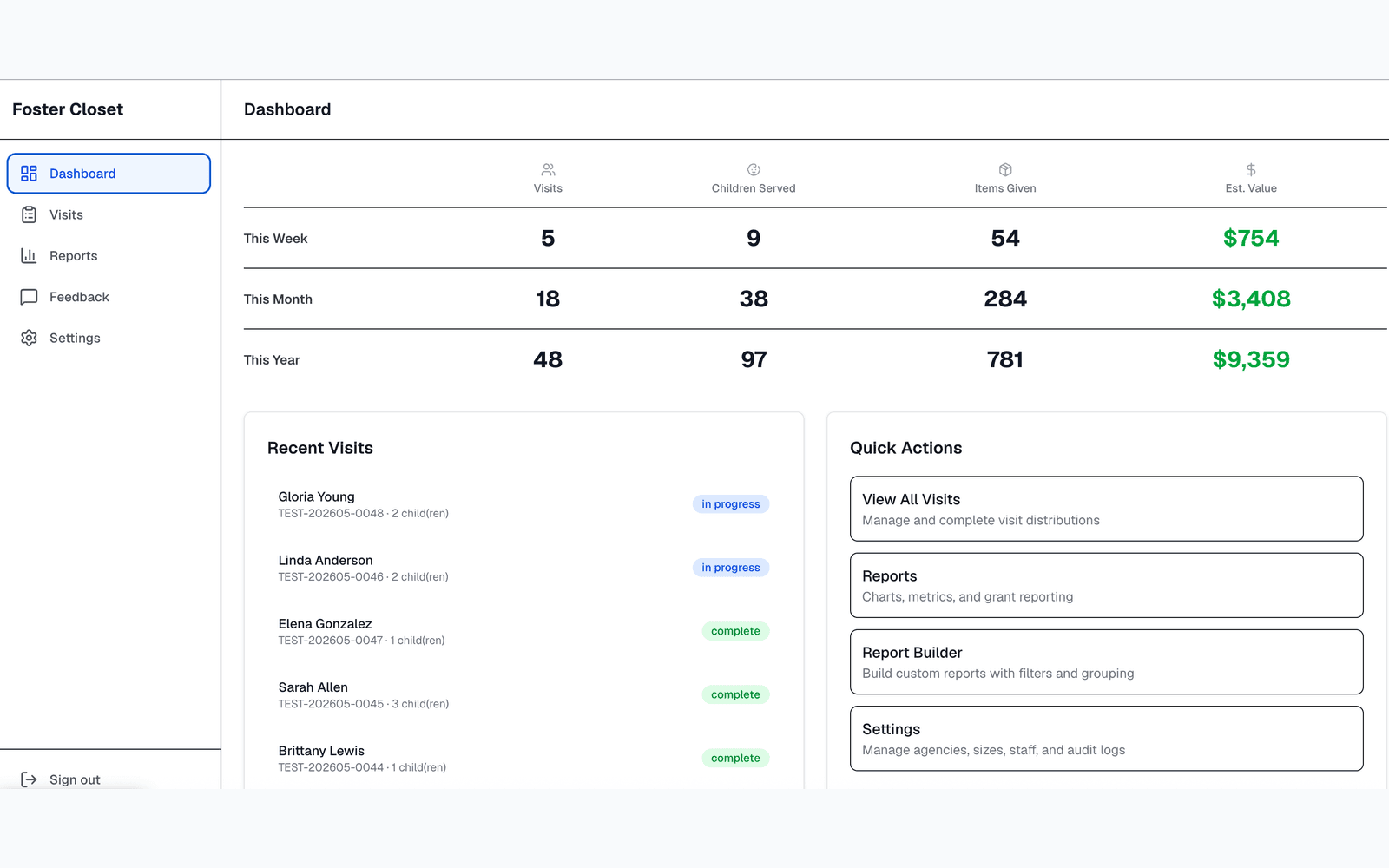
- Inventory, donor, checkout, and service reporting render from the same operational data.
- The platform was designed to be portable to other chapters.
The challenge
The nonprofit runs a free store for foster families and needed to track donations, manage inventory, process check-outs, and capture donor information — all while keeping the experience dignified for families and fast for volunteers. Off-the-shelf point-of-sale systems treated it like a retail store; nonprofit-specific tools didn't handle the donation-side intake or the volunteer-first experience.
How we did it
We built a single Next.js and Supabase application unifying donation intake, inventory, point-of-sale, and reporting.
- A QR-and-photo intake flow: a volunteer photographs an incoming donation, an AI vision pipeline categorizes and tags it, and the item is shelved with a printed QR label.
- Family check-out runs through the same QR system: scan items, capture family-unit data, and produce receipts for tax purposes.
- Role-based access so volunteers see only what they need, while admins get full reporting on inventory turnover, donor sources, and family service metrics.